Start
04/05/2026
Close
∞
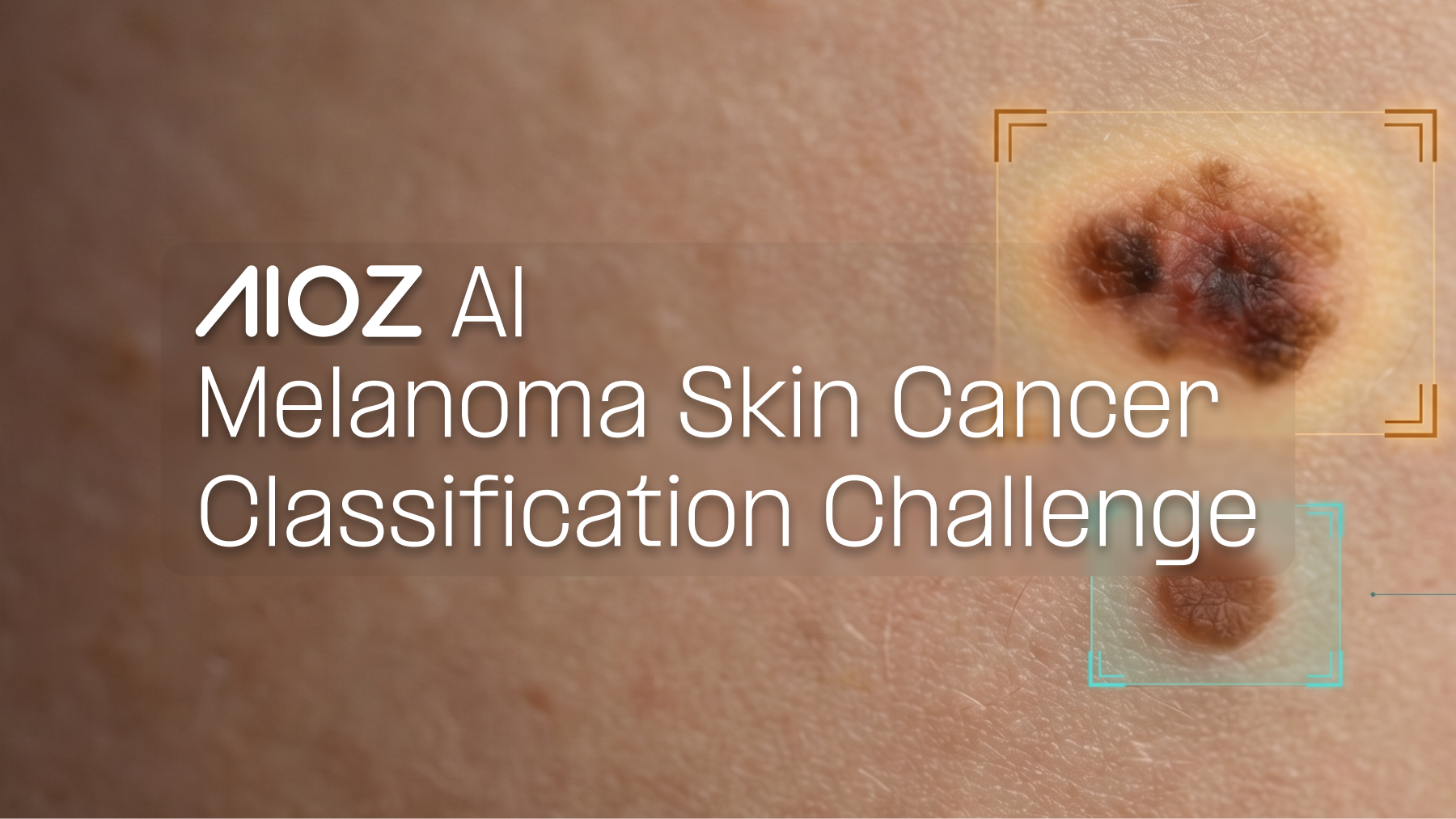
Melanoma Skin Cancer Classification Challenge
Deep Learning for Accurate Skin Cancer Diagnosis
Challenge Rewards:
knowledgeParticipants
54
Submissions
47
Overview
Melanoma is the most serious type of skin cancer, and early detection is crucial for successful treatment. Automated detection from dermatoscopic images is a classic problem in medical image analysis. In this competition, your task is to build a model that determines whether a skin lesion is benign or malignant (melanoma) based on its visual features.
You will work with a labeled dataset of high-resolution dermatoscopic images, giving you an opportunity to practice essential Computer Vision (CV) skills such as image preprocessing, data augmentation, and deep learning. This challenge is beginner-friendly and walks you through the full workflow of building an image-based machine learning model — from exploring medical data to generating accurate predictions.
Practice Skills
In this challenge, you will gain hands-on experience with:
- Python
- Image Processing and Computer Vision (CV)
- Deep Learning
- Medical Data Classification
Evaluation
Goal
Train a classification model that predicts whether each skin lesion in the test set is Benign or Malignant (Melanoma).
Metric
Submissions are evaluated on Accuracy:
Submission Format
See the submission guide for full instructions.
The submission file has two fields:
- id: The image filename.
- label: The predicted label for the corresponding image (
0= Benign,1= Melanoma).
| id | label |
|---|---|
9c9a204a57f34a71b9454fef633f7038.jpg | 0 |
cec04296a9bf4b969a8770f3ee2b439f.jpg | 1 |
Submission Types
The challenge accepts two types of submissions:
Public Submission
Use the public test set (provided in the Data section) to generate your submission file.
Private Submission
- You must submit your model.
- It will be evaluated on a private test set.
- Important: Your code must recursively scan the entire data directory (see the Code section for implementation details).