All Models
Qwen2.5-Omni-7B
Qwen2.5-Omni-7B is an end-to-end multimodal foundation model that perceives text, images, audio, and video while streaming both text and natural speech responses in real time. Built on the novel Thinker–Talker architecture with TMRoPE time-aligned multimodal position embeddings, it delivers state-of-the-art results on OmniBench and matches or surpasses similarly sized single-modality models across speech, vision, and audio reasoning benchmarks. Its end-to-end speech-instruction-following ability rivals its text-input performance on standards such as MMLU and GSM8K.
by @AIOZAI


License Plate Recognition Challenge
Model for License Plate Recognition Challenge
by @AIOZAI
Z-Image Turbo
Z-Image-Turbo is a 6B-parameter text-to-image diffusion model distilled from the Z-Image foundation model, producing high-fidelity images in only 8 NFEs (Number of Function Evaluations). It delivers sub-second inference latency on H800-class GPUs and fits within 16 GB of VRAM on consumer hardware, while preserving strong photorealism, bilingual (English/Chinese) text rendering, and reliable instruction following.
by @AIOZAI
QwQ-32B
QwQ-32B is a 32.5B-parameter causal reasoning model from the Qwen series, post-trained with supervised fine-tuning and reinforcement learning to think explicitly before answering. Despite its mid-range size, it delivers performance competitive with leading reasoning systems such as DeepSeek-R1 and o1-mini, particularly on hard math, coding, and multi-step problems. It supports a native 131,072-token context (with YaRN scaling for inputs beyond 8,192 tokens) and is best driven with non-greedy sampling (Temperature 0.6, TopP 0.95, TopK 20–40).
by @AIOZAI
Phi-4
Phi-4 is Microsoft's 14B-parameter dense decoder-only language model, trained on ~9.8T tokens of synthetic, textbook-quality, and curated web data with a 16K-token context window. It is engineered for reasoning and logic in memory- or latency-constrained deployments, matching or surpassing far larger models on math (MATH: 80.4) and science (GPQA: 56.1) benchmarks. Released under the permissive MIT license with SFT + DPO alignment for instruction following and safety.
by @AIOZAI
Qwen3-Coder-Next
Qwen3-Coder-Next is an open-weight coding model from the Qwen team that activates just 3B of its 80B parameters per token, matching the performance of models 10–20× larger at a fraction of the inference cost. It pairs a hybrid Gated DeltaNet + Gated Attention MoE architecture with a native 262,144-token context, and is purpose-built for agentic coding tasks such as long-horizon reasoning, tool use, and failure recovery, with out-of-the-box support for Claude Code, Qwen Code, Qoder, Kilo, Trae, and Cline.
by @AIOZAI

Spaceship Titanic Prediction Challenge
Model for Spaceship Titanic Prediction Challenge
by @AIOZAI

HeartMuLa
Most open-source music models give you one capability. HeartMuLa gives you four: a lyrics-conditioned song generator, a high-fidelity music codec, a lyrics transcription model, and an audio-text alignment model — all open-sourced together as a coherent foundation. The 3B generator handles multilingual lyrics across English, Chinese, Japanese, Korean, and Spanish, with style controlled through simple comma-separated tags. An internal 7B version already reaches Suno-level quality, with the open 7B release planned.
by @AIOZAI

UI-Venus 1.5
Give UI-Venus 1.5 a natural language instruction and a screenshot — it will find the right button, navigate the interface, and complete the task, just like a human would. No accessibility APIs, no DOM parsing, no special permissions needed. The unified 2B/8B/30B-A3B model family achieves state-of-the-art results on major GUI benchmarks including AndroidWorld (77.6%) and ScreenSpot-Pro (69.6%), with a full Android automation framework supporting 40+ mainstream apps out of the box.
by @AIOZAI
Text Generation with SmolLM-135M
Text Generation with SmolLM-135M involves utilizing a compact language model with 135 million parameters to automatically generate text. This model, although smaller in size, is proficient at producing coherent and structured textual content.
by @AIOZAI
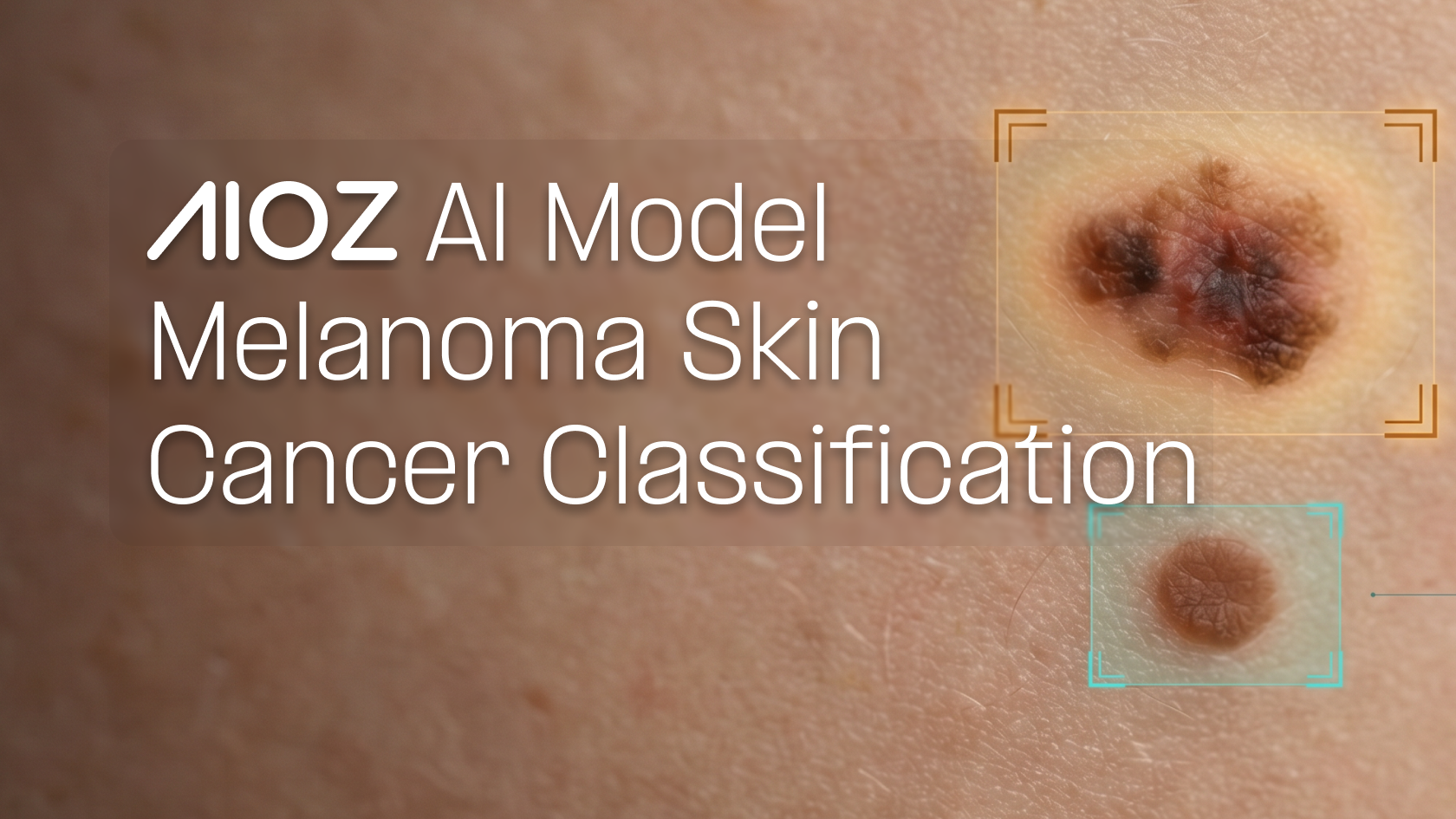
Melanoma Skin Cancer Classification Challenge
Model for Melanoma Skin Cancer Classification Challenge
by @AIOZAI
DeepSeek-OCR
DeepSeek-OCR reimagines optical character recognition as a context compression problem — treating visual documents not as images to scan, but as information to compress and decode through an LLM-centric vision encoder. It converts documents, PDFs, and images to clean markdown, extracts text with layout awareness, parses figures, and localizes specific elements by reference — all at ~2500 tokens per second on a single A100 with vLLM. Multiple resolution modes from 64 to 400+ vision tokens let you tune the quality-speed tradeoff for your use case.
by @AIOZAI
LightRAG
LightRAG is a simple, fast, and powerful RAG system that goes beyond chunk retrieval by automatically building a knowledge graph from your documents — then querying both the graph and vector store simultaneously for richer, more contextually aware answers. Published at EMNLP 2025 and trusted by 29k+ developers, it works with any LLM, supports production-grade storage backends, and ships with a Web UI featuring live knowledge graph visualization.
by @AIOZAI
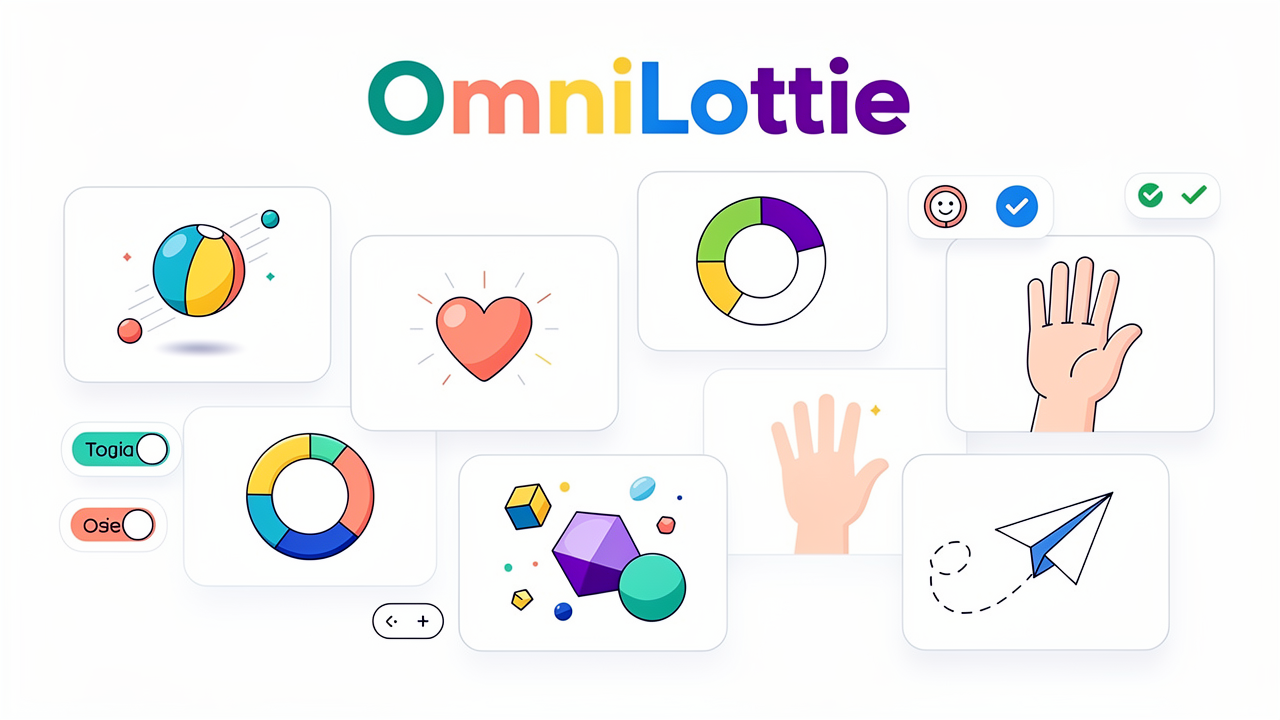
OmniLottie
OmniLottie is the first end-to-end model capable of generating Lottie animations directly from text descriptions, images, or video clips — producing structured, editable JSON output rather than raster video. Built on a 4B vision-language model and trained on MMLottie-2M, a dataset of 2 million annotated animations, it introduces a custom Lottie tokenizer that makes complex vector animation learnable by a language model. Accepted to CVPR 2026.
by @AIOZAI
Iris Flower Classification Challenge
Model for Iris Flower Classification Challenge
by @AIOZAI
Supertonic 2
Most TTS systems make you choose between speed, quality, and privacy. Supertonic 2 refuses that tradeoff — a featherweight 66M parameter model that runs 167× faster than real-time, entirely on your device, with zero network dependency. Powered by ONNX Runtime, it deploys across 11 platforms from iOS to Rust to the browser, supports 5 languages, and correctly reads complex real-world expressions that trip up every major cloud TTS API.
by @AIOZAI
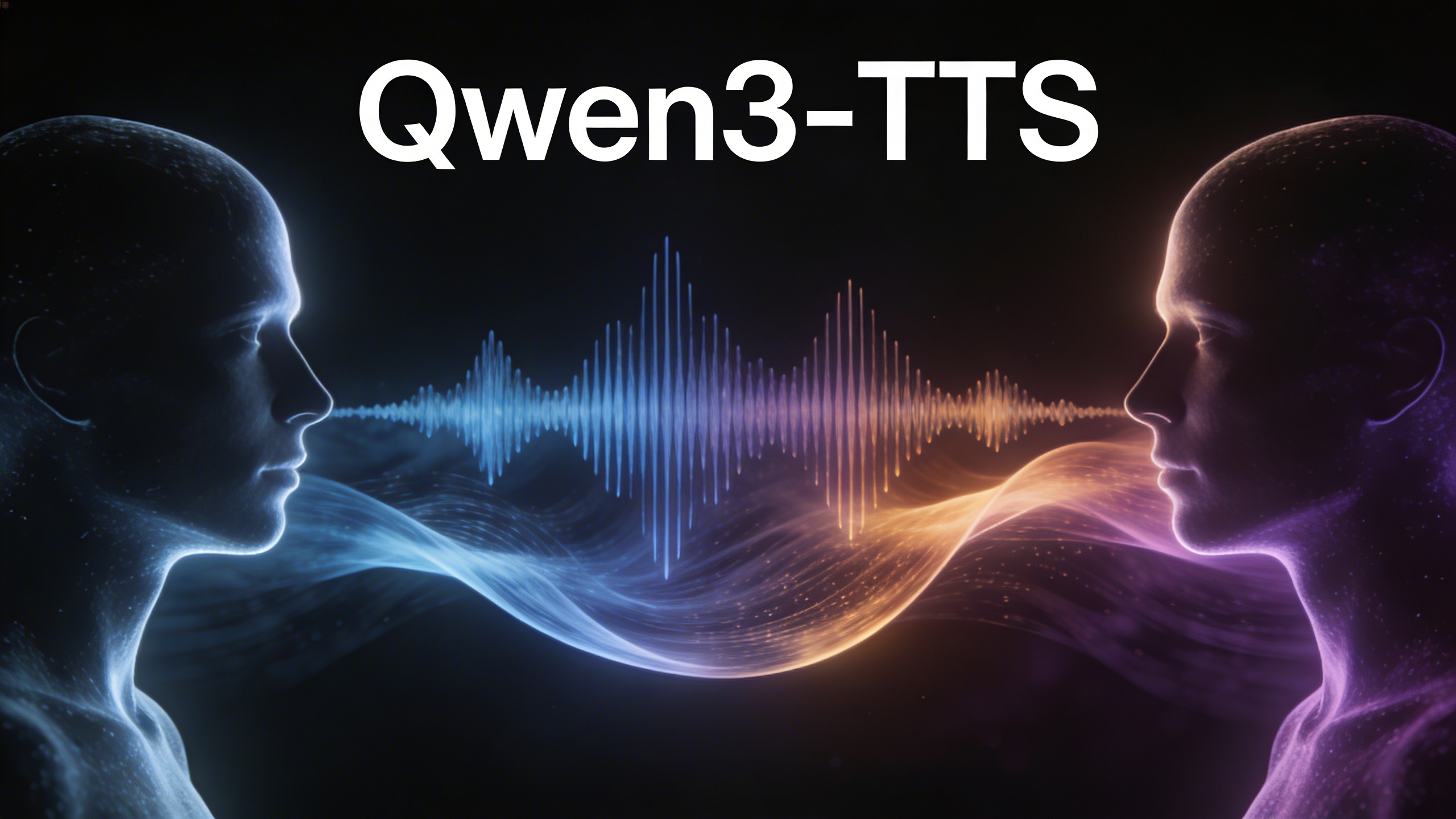
Qwen3-TTS
Qwen3-TTS is a family of advanced multilingual, controllable, robust, and streaming text-to-speech models. Trained on over 5 million hours of speech data spanning 10 languages, Qwen3-TTS supports state-of-the-art 3-second voice cloning and description-based control.
by @AIOZAI
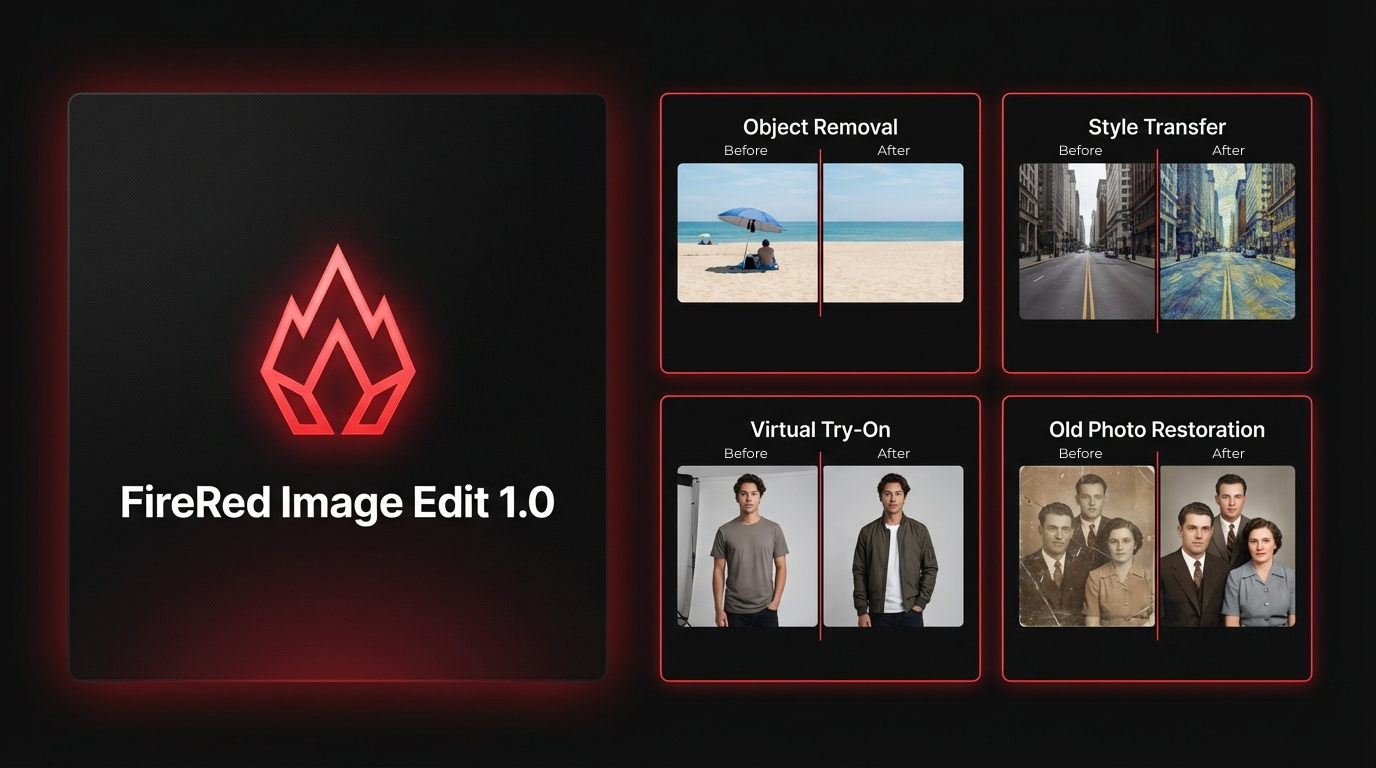
FireRed-Image-Edit-1.1
Edit anything in an image with a simple text instruction. FireRed-Image-Edit covers the full spectrum of image editing — from swapping backgrounds and retouching portraits to restoring old photos and performing virtual try-on across multiple images. With leading benchmark scores among all open-source models and bilingual Chinese–English instruction support, it's built for both researchers and real-world applications.
by @AIOZAI
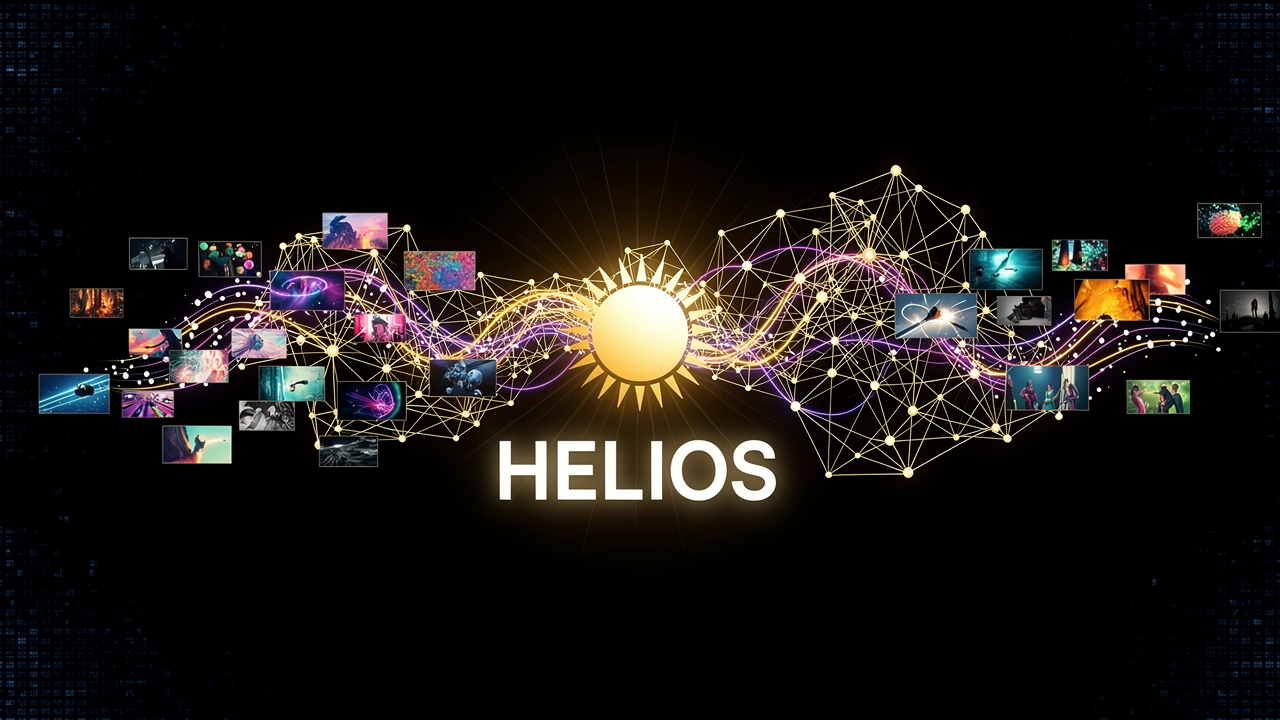
Helios-Distilled
Generate up to 60 seconds of high-quality video from a text prompt, a single image, or an existing video clip — all running at real-time speeds on a single H100. Helios-Distilled is the most efficient variant of the 14B Helios family, distilled to 3 inference steps while maintaining strong visual coherence and temporal consistency. No KV-cache, no quantization, no anti-drifting hacks — just fast, clean video generation out of the box.
by @AIOZAI
Email Spam Classification Challenge
Model for Email Spam Classification Challenge
by @AIOZAI